Call us now: 925-385-8104
How Do Graphene Sheets Conduct Heat in Comparison to Diamond?
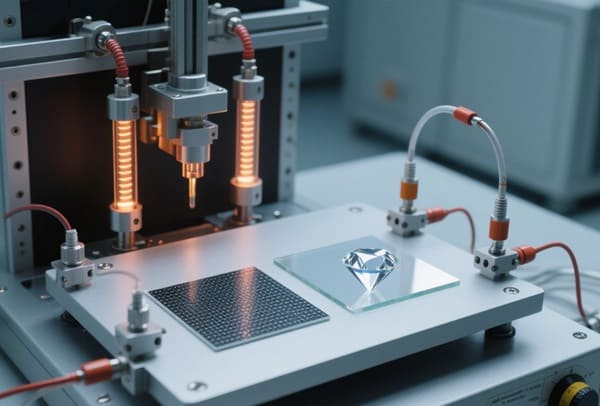
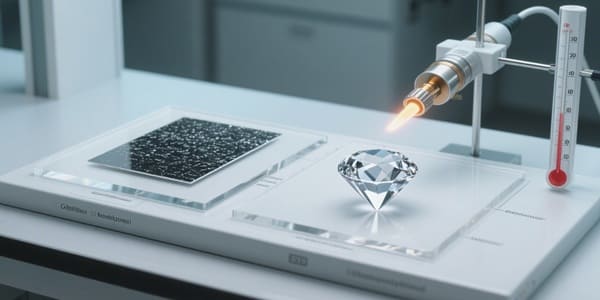
Graphene and diamond are two of the most thermally conductive materials known to science. Both are composed of carbon atoms, yet their crystal structures, bonding types, and dimensional forms result in dramatically different thermal behaviors. Understanding how a graphene sheet conducts heat compared to diamond is essential for engineers working in electronics, magnetics, thermal interfaces, and advanced cooling systems. In this article, we explore the mechanisms of heat conduction in graphene sheets and diamonds, provide comparative data, evaluate practical use cases, and identify future trends in thermal materials design.
At Heeger Magnet, we specialize in high-quality graphene sheet products, ensuring optimal performance for industrial and scientific applications.
What Is a Graphene Sheet and Why Is It Thermally Significant?
A graphene sheet is a single layer of carbon atoms arranged in a two-dimensional honeycomb lattice. Its exceptional thermal conductivity—often exceeding 5000 W/m·K in the in-plane direction—arises from the strong covalent bonds and lack of phonon scattering.
| Property | Graphene Sheet | Relevance |
| Structure | 2D hexagonal carbon lattice | Enables ballistic phonon transport |
| Bonding Type | sp² | High energy, efficient heat flow |
| Thermal Conductivity | Up to 5000 W/m·K (in-plane) | One of the highest in any material |
| Electrical Conductivity | Excellent | Supports dual thermal-electric roles |
Graphene’s atomic thinness allows it to serve as an ultra-light thermal spreader in applications where size and weight constraints matter, such as wearables, drones, and mobile devices.
Explore our high-quality graphite products.
What Makes Diamond a Top-Tier Thermal Conductor?
Diamond, although also composed of carbon, features a 3D tetrahedral lattice with sp³ bonding. This configuration results in extremely high phonon velocity and stiffness, making diamond the benchmark for bulk thermal conductivity.
| Property | Diamond | Relevance |
| Structure | 3D tetrahedral carbon lattice | Excellent isotropic heat transfer |
| Bonding Type | sp³ | Strong lattice vibrations |
| Thermal Conductivity | ~2200 W/m·K (bulk) | Ideal for large-scale heat spreading |
| Hardness | Highest of all materials | Dual-use in abrasive and thermal fields |
Diamond is preferred for heat sinks and high-power applications like RF amplifiers, high-brightness LEDs, and laser cooling, where spreading heat evenly in three dimensions is critical.
How Do Their Thermal Properties Compare Directly?
When directly comparing thermal performance, it’s essential to account for dimensional effects. Graphene sheets excel in-plane but lose conductivity in the cross-plane direction. Diamond, on the other hand, offers consistent performance in all directions.
| Material | Thermal Conductivity (W/m·K) | Thermal Direction | Form Factor |
| Monolayer Graphene | 3500–5000 | In-plane | 2D atomic layer |
| Few-layer Graphene | 1000–3000 | In-plane | Stackable sheets |
| Diamond (bulk) | ~2200 | Isotropic | Crystal block |
| Diamond Thin Film | ~500–1200 | Directional | Polycrystalline layer |
Thus, graphene sheets are optimal when horizontal heat flow dominates, while diamond remains king for bulk, vertical, and isotropic thermal dissipation.
In What Applications Do Graphene Sheets Outperform Diamond?
Graphene’s extreme thinness and flexibility open doors to applications that diamond simply cannot serve. It enables heat spreading in next-gen compact and flexible electronics.
Graphene sheet advantages:
- Heat spreaders in foldable smartphones and tablets
- Lightweight thermal layers in aerospace modules
- Integrated cooling films in magnet-based PCB assemblies
- Stretchable sensors and wearables requiring passive cooling
These use cases benefit from graphene’s unique combination of conductivity, strength, and flexibility, especially where space is constrained and performance matters.
Where Does Diamond Still Lead in Thermal Performance?
Despite graphene’s dominance in 2D form, diamond is unmatched in high-volume heat extraction. It remains essential in rugged environments and power-intensive applications.
Diamond outperforms in:
- Laser diode submounts requiring bulk cooling
- High-frequency RF and microwave modules
- Diamond-coated heat spreaders in military tech
- Semiconductor wafers for GaN or SiC power devices
Diamond’s hardness also means it can function as a dual thermal-mechanical interface, reducing wear while conducting heat.
What Are the Limitations of Graphene Sheets in Thermal Management?
Although promising, graphene sheets face practical challenges. These include manufacturing consistency, defect control, and thermal contact resistance.
Graphene sheet limitations:
- Difficult to produce large, defect-free films
- Interfacial thermal resistance with substrates
- Layer stacking reduces thermal efficiency
- Limited vertical heat conduction
These hurdles are active areas of research. Progress in these areas will determine how widely graphene can replace traditional materials like diamond.
How Do Graphene Sheets and Diamond Behave Under Magnetic and High-Frequency Conditions?
In magnetic or electromagnetic environments, graphene offers unique advantages over insulating diamond. Its conductivity, flexibility, and RF compatibility make it useful in smart magnetic modules.
| Property | Graphene Sheet | Diamond |
| RF Transparency | High | Moderate |
| Magnetic Field Stability | Excellent | Excellent |
| Electrical Conductivity | Yes (tunable) | No (insulator) |
| Integration with Circuits | Seamless in thin-film form | Challenging |
For magnetism-sensitive electronics like Hall sensors, inductive chargers, or magnetic shielding, graphene layers can serve both thermal and electronic functions.
What Are the Future Trends in Graphene Sheets vs Diamond Thermal Applications?
Both graphene and diamond are evolving, not competing. Emerging applications favor hybrid solutions that combine the benefits of each material.
Future trends include:
- Graphene-diamond layered heterostructures
- Graphene-polymer thermal films for consumer electronics
- Diamond substrates with graphene overlays
- AI-driven thermal modeling for design optimization
The industry is moving toward engineered thermal stacks, where graphene sheets handle lateral heat, and diamond handles bulk conduction.
Request a custom quote for the graphene sheet product.
FAQ
| Question | Answer |
| Is graphene better than diamond for thermal conduction? | In 2D lateral heat transfer, yes. Diamond is better for 3D bulk transfer. |
| Can graphene replace diamond in high-power systems? | Not fully—graphene suits nanoscale roles; diamond remains key in macro systems. |
| Does diamond conduct heat equally in all directions? | Yes, it is isotropic. Graphene is direction-dependent. |
| Which is more affordable for thermal films? | Graphene, especially in composite forms. |
| Are hybrid graphene-diamond materials real? | Yes, research is underway on layered and composite materials. |
Conclusion
Both graphene sheets and diamond excel in thermal conductivity, but their uses diverge based on form, scale, and directionality. Graphene sheets dominate in ultra-thin, flexible, and directional heat spreading applications, particularly in electronics, magnetics, and wearables. Diamond continues to lead in isotropic, bulk, and rugged high-heat applications. Rather than a battle, the future of thermal engineering lies in synergy—using each material where it performs best. For engineers designing the next generation of magnetic or electronic systems, selecting between a graphene sheet or a diamond substrate could define the product’s thermal success. Heeger Materials provides advanced thermal materials, including graphene sheets and engineered ceramics, to support innovative designs across the magnetic and electronic industries.
Looking for a high-quality graphene sheet product? Contact us today!