Call us now: 925-385-8104

Disc vs. Cylinder Magnets: Strength Comparison for Motors & Holders
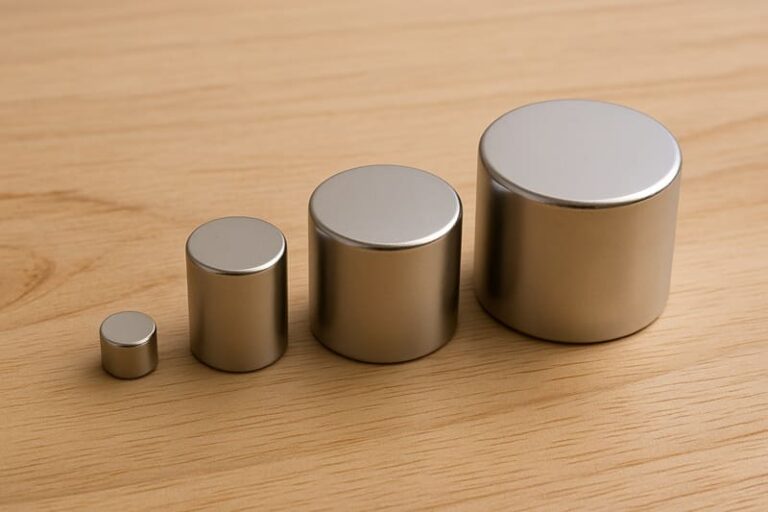
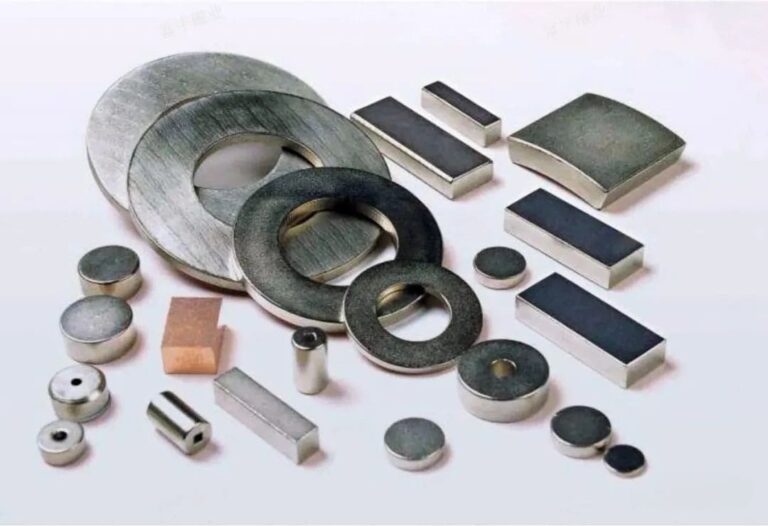
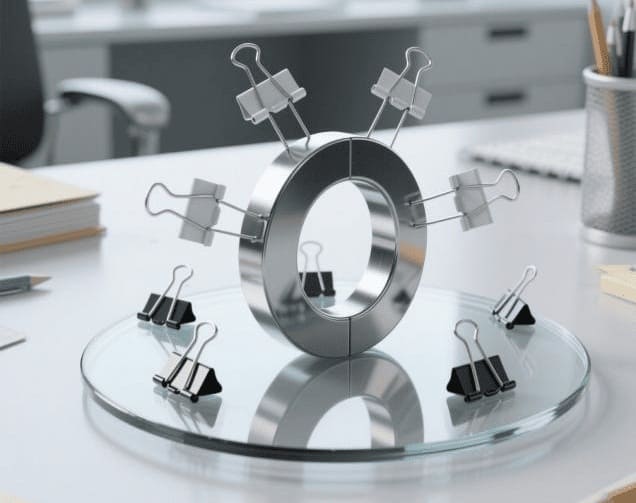
Magnets power everything from electric vehicle motors to magnetic holders in various industries. Disc (flat, circular) and cylinder (elongated, rod-like) are common shapes for high-performance neodymium magnets. These shapes affect the strength, distribution, and suitability of the magnets for specific applications like motors (e.g., brushless DC motors) and holders (e.g., magnetic mounts). Understanding the differences in strength between disc and cylinder magnets is crucial for optimizing performance and efficiency. This post compares their magnetic properties and practical applications to guide engineers and enthusiasts.
The choice of magnet shape can significantly impact the performance of a motor or holder. For instance, a motor’s torque and efficiency depend on the magnet’s field strength and how it interacts with the rotor, while a holder’s ability to secure objects relies on the magnet’s pull force and field reach. This article will delve into the science behind disc and cylinder magnets, offering insights into their strengths and limitations through detailed comparisons and real-world examples. Whether you’re designing a high-performance motor or selecting a magnet for a secure mount, this guide will help you make informed decisions.
At Heeger Magnet, we specialize in high-quality disc and cylinder magnets with various specifications, ensuring optimal performance for industrial and scientific applications.
Overview of Disc and Cylinder Magnets
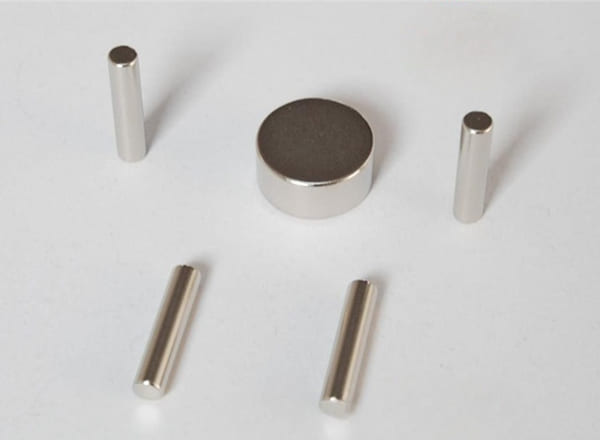
Disc and cylinder magnets, typically made from neodymium-iron-boron (NdFeB), are among the strongest permanent magnets available, offering high magnetic strength (up to ~1.4 Tesla) and excellent resistance to demagnetization. Disc magnets are characterized by their flat, circular shape, with a large diameter relative to thickness (e.g., 50 mm diameter, 5 mm thick). They are typically magnetized axially (through the thickness) or, less commonly, diametrically (across the diameter). Cylinder magnets, on the other hand, are elongated, with a length greater than or equal to their diameter (e.g., 10 mm diameter, 20 mm long), and are usually magnetized axially along their length. These shapes determine how the magnetic field is distributed and how the magnet interacts with its environment.
In motors, magnets are critical components of the rotor or stator, generating the magnetic field that drives motion. Disc magnets are often used in flat, pancake-style motors, while cylinder magnets are common in radial flux motors, where their elongated shape aligns with cylindrical rotor designs. In holders, disc magnets provide strong surface adhesion for applications like magnetic mounts, while cylinder magnets offer deeper field penetration for securing objects at a distance. The following outlines their basic characteristics:
Basic Characteristics
| Feature | Disc Magnets | Cylinder Magnets |
| Shape | Flat, circular with uniform thickness | Rod-like with consistent diameter |
| Magnetization | Flat, circular, with uniform thickness | Axial or diametric (through length/sides) |
| Common Sizes | Ø3mm–50mm, 1–10mm thick | Ø2mm–30mm, 5–100mm long |
| Material | NdFeB, SmCo, Ferrite | NdFeB, AlNiCo, Ferrite |
Looking for top-quality disc and cylinder magnets? Explore Heeger Magnet’s selection.
Magnetic Strength Comparison: Disc vs. Cylinder Magnets
This technical analysis compares the magnetic performance of disc and cylinder magnets, focusing on key strength parameters and practical implications for selection. We delve into the magnetic strength of disc and cylinder magnets, comparing their field distribution, strength metrics (Gauss, Tesla, pull force), and the impact of shape and size. Through detailed analysis, we uncover how these factors influence performance in motors and holders, guiding optimal magnet selection.
A. Magnetic Field Distribution
The magnetic field distribution plays a key role in a magnet’s performance, affecting how it interacts with surrounding components. Disc magnets, with their flat surfaces, create a broad and uniform field near their faces, making them ideal for surface attraction applications like magnetic holders, where the field is concentrated within 1-2 mm. However, their reach is limited as the field strength quickly decreases with distance. In contrast, cylinder magnets generate a more focused field along their length, extending further from the poles, which is useful for applications like motors, where the magnet interacts with a rotating rotor at a distance. While their field is less uniform and stronger at the poles, cylinder magnets offer deeper penetration, making them suitable for applications requiring a focused field beyond the surface. The choice between the two shapes depends on whether a broad, surface-level, or deeper, focused field is needed.
Factors Influencing Field Distribution
- Shape Geometry: Discs have a larger surface area; cylinders have a longer axis.
- Magnetization Direction: Axial magnetization focuses the field at the poles, and diamagnetic spreads it radially.
- Material: NdFeB provides stronger fields than ferrite or Alnico magnets.
| Parameter | Disc Magnet | Cylinder Magnet |
| Surface Flux | 3,800-4,500G | 3,200-4,000G |
| 5mm Standoff | 1,200-1,800G | 1,500-2,200G |
| Field Gradient | Steeper drop-off | More gradual decline |
B. Strength Metrics (Gauss/Tesla, Pull Force)
Magnetic strength is quantified using metrics like surface Gauss (magnetic flux density at the surface), Tesla (SI unit of magnetic flux density), and pull force (the force required to separate the magnet from a ferromagnetic surface). For disc magnets, surface Gauss values for NdFeB magnets typically range from 3000–6000 Gauss, depending on size and grade (e.g., N42, N52). A 25 mm diameter, 5 mm thick N52 disc magnet might have a surface field of ~4500 Gauss and a pull force of ~10–15 kg. Cylinder magnets, with a smaller pole area but longer field reach, often have slightly lower surface Gauss (e.g., 2500–5000 Gauss) but maintain strength over a greater distance. For example, a 10 mm diameter, 20 mm long N52 cylinder magnet might have a pull force of ~5–10 kg.
The strength metrics depend on the magnet’s size, aspect ratio, and grade. Disc magnets excel in applications requiring high surface strength, such as holders, due to their large pole area. Cylinder magnets, with their extended field, are better suited for motors, where the field must interact with components at a distance.
| Shape | Size Example | Surface Gauss | Pull Force (kg) | Notes |
| Disc | 25 mm dia. x 5 mm thick | 4000–6000 | 10–15 | High surface strength, short field range |
| Cylinder | 10 mm dia. x 20 mm long | 2500–5000 | 5–10 | Deeper field reach, lower surface strength |
C. Influence of Shape and Size
The geometry of a magnet significantly affects its magnetic strength and performance. For disc magnets, the diameter-to-thickness ratio is critical. A larger diameter relative to thickness (e.g., 50 mm dia. x 5 mm thick) increases the surface area, enhancing surface field strength and pull force, ideal for holders. However, thin discs have a limited field of reach, making them less effective in applications requiring deeper penetration. Conversely, cylinder magnets with a high length-to-diameter ratio (e.g., 10 mm dia. x 30 mm long) concentrate the magnetic field along their length, extending the effective range but reducing surface field intensity due to smaller pole areas.
Size also plays a role. Larger magnets (in volume or mass) generally produce stronger fields, but practical constraints like cost, weight, and space limit their use. For example, a larger disc magnet may be impractical in a compact motor, while a long cylinder magnet may not fit in a flat holder design. The choice of shape and size must align with the application’s spatial and performance requirements, balancing strength with design constraints.
- Disc Magnets: High diameter-to-thickness ratio increases surface strength; thin profiles limit field depth.
- Cylinder Magnets: High length-to-diameter ratio extends field range; smaller pole area reduces surface strength.
- Design Trade-offs: Larger magnets increase strength but add cost and weight.
Explore our optimized cylinder magnets.
Applications of Disc vs. Cylinder Magnets in Motor Designs
In motors, such as brushless DC (BLDC) or stepper motors, magnets generate the magnetic field that interacts with the stator’s electromagnetic field to produce torque. Disc magnets are commonly used in axial flux motors, where their flat shape aligns with a pancake-style rotor, delivering a strong, uniform field across a broad surface. This is advantageous in compact motors for drones or small appliances, where space is limited, and high surface strength enhances torque (e.g., ~0.5–2 Nm for small BLDC motors). However, their limited field depth can reduce efficiency in larger motors requiring deeper magnetic interaction.
Cylinder magnets excel in radial flux motors, where their elongated shape aligns with cylindrical rotors, providing a focused field that extends radially to interact with stator windings. This configuration is common in electric vehicle motors or industrial robotics, where high torque (e.g., 10–100 Nm) and efficiency are critical. Cylinder magnets’ deeper field penetration ensures consistent performance, though their smaller pole area may require multiple magnets to achieve the desired flux density. The following table compares their motor applications:
1. Fundamental Differences in Motor Applications
| Characteristic | Disc Magnets | Cylinder Magnets |
| Typical Motor Type | Axial Flux Motors | Radial Flux Motors |
| Flux Path | Short, direct | Longer, curved |
| Cooling Efficiency | Better (exposed faces) | Challenging (embedded) |
| Manufacturing Cost | 15-20% lower | Higher (precision needed) |
2. Material Selection Guidelines
✅ For High-Temperature Applications:
- Disc: SmCo preferred (better heat dissipation)
- Cylinder: NdFeB with Dy doping (higher coercivity)
✅ High-Speed Motors (>20,000 RPM):
Disc magnets:
- 30% less centrifugal stress
- Easier to secure with adhesives
Cylinder magnets:
- Require carbon fiber sleeves
- Limited to <15mm diameter
3. Specialized Motor Applications
✅ Disc Magnet Dominance:
- Hub motors (e-bikes/scooters)
- PCB motors (consumer electronics)
- Coreless designs (medical devices)
✅ Cylinder Magnet Superiority:
- Servo motors (precision control)
- Traction motors (rail/industrial)
- Linear actuators
Request a custom quote for high-quality disc and cylinder magnets.
Applications of Disc vs. Cylinder Magnets in Magnetic Holders
In magnetic holders, such as tool racks, magnetic mounts, or door latches, the magnet’s ability to attract and secure ferromagnetic objects is paramount. Disc magnets are highly effective in holders requiring strong surface adhesion, such as magnetic mounts for GPS devices or phone holders. Their large surface area maximizes pull force (e.g., 10–20 kg for a 30 mm dia. x 5 mm thick NdFeB disc), ensuring a secure grip on flat surfaces. However, their shallow field depth limits their ability to hold objects at a distance, making them less suitable for applications requiring reach.
Cylinder magnets are preferred in holders where deeper field penetration is needed, such as tool holders or magnetic clamps that secure objects several millimeters away. For example, a 15 mm dia. x 30 mm long cylinder magnet can maintain a pull force of ~5–10 kg at a distance of 5–10 mm, ideal for applications like knife racks or heavy-duty clamps. Their smaller pole area reduces surface strength compared to discs, but their extended field makes them versatile for dynamic holding tasks.
1. Holding Force Characteristics
Test Conditions: N42 grade, steel plate contact, 25°C ambient
| Magnet Size | Disc Pull Force | Cylinder Pull Force | Grip Advantage |
| Ø10mm × 5mm | 3.2 kg | 2.8 kg (L=10mm) | Disc +14% |
| Ø20mm × 10mm | 9.5 kg | 7.1 kg (L=20mm) | Disc +34% |
| Ø15mm × 30mm | N/A | 12.4 kg | Cylinder only |
2. Specialized Holder Applications
✅ Best Uses for Disc Magnets:
- Tool Holders (maximizing surface contact)
- Signage Systems (slim profile requirements)
- Cabinet Latches (consistent flat-surface grip)
- Whiteboard Mounts (distributed force)
✅ Best Uses for Cylinder Magnets:
- Retrieval Tools (deep reach capability)
- Safety Latches (through-panel mounting)
- Industrial Fixtures (vibration resistance)
- Assembly Jigs (precise alignment)
3. Selection Guidelines
✅ Choose Disc Magnets When:
✔ Maximum holding force per size is critical
✔ Mounting space is limited in thickness
✔ Flat, smooth contact surfaces available
✔ Cost-sensitive applications
✅ Choose Cylinder Magnets When:
✔ Through-panel mounting required
✔ Non-flat or uneven surfaces involved
✔ Vibration damping needed
✔ Precise alignment is necessary
At Heeger Magnet, we supply premium-grade disc and cylinder magnets that meet international IEC, ISO, and ASTM standards, guaranteeing exceptional magnetic performance and reliability.
In conclusion, both disc and cylinder magnets offer distinct advantages depending on the application. Disc magnets are generally preferred when a concentrated magnetic field is needed, making them ideal for use in motors requiring high efficiency and power density. Cylinder magnets, on the other hand, are more suitable for applications that need evenly distributed magnetic fields or when space is a limiting factor.
Both types of magnets have specific use cases that make them essential in various industries. By understanding their strengths and weaknesses, you can select the optimal magnet for your project, ensuring better performance and durability.
For top-quality disc and cylinder magnets, Heeger Magnets provides tailored solutions for various applications.
Looking for premium disc and cylinder magnets? Contact us today!