Call us now: 925-385-8104
Why Is the Shape of Cylinder Magnets Important for Their Magnetic Properties?
Cylinder magnets are one of the most commonly used magnet shapes in industrial and scientific applications. But have you ever wondered why their shape matters so much? The geometry of a magnet isn’t just about fitting into a device—it plays a major role in how magnetic fields behave and how effective the magnet is in its application. In this article, we’ll explore how the cylindrical shape influences magnetic properties, why it’s chosen over other forms, and how to select the right one for your needs.
From consumer electronics to medical equipment and industrial separators, cylinder magnets serve a critical role thanks to their directional magnetic strength, balanced structure, and ease of alignment. Understanding how their shape affects performance can help engineers and manufacturers make smarter material and design choices.
At Heeger Magnet, we specialize in various magnet products, ensuring optimal performance for industrial and scientific applications.

What Are Cylinder Magnets and Where Are They Used?
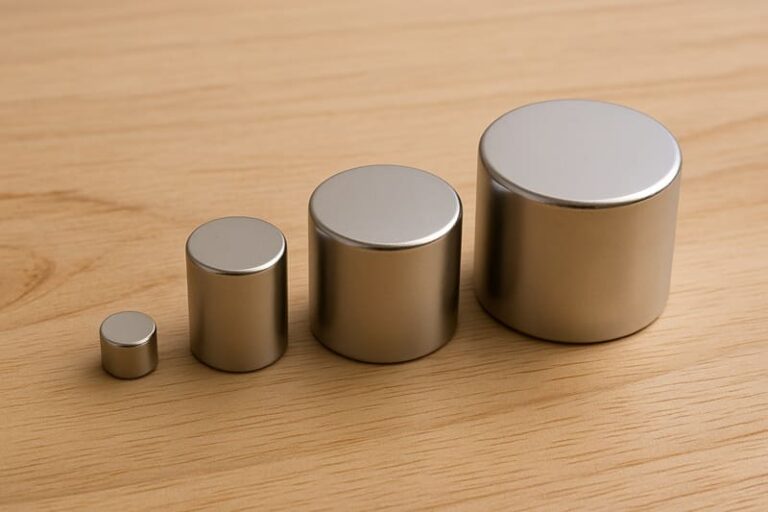
Cylinder magnets are magnets shaped like a tube or rod, having a length greater than or equal to their diameter. They are typically magnetized axially (along the length), although radial and diametrical magnetization is possible depending on the application.
Common Uses of Cylinder Magnets:
- Sensors and encoders: Used in rotary and linear position sensing
- Medical equipment: MRI shielding, drug delivery components
- Magnetic stirrers: Used in lab mixing devices
- Motors and generators: Compact and efficient field generation
- Magnetic separators: Extracting ferrous particles in flow systems
Their symmetrical shape allows for uniform magnetic fields in targeted directions and makes them ideal for insertion into drilled holes or tubes in mechanical assemblies.
How Does Shape Affect Magnetic Field Strength and Direction?
The shape of a magnet determines how its magnetic field lines are distributed. For cylinder magnets, the longer the cylinder is relative to its diameter, the more concentrated and directional the magnetic field becomes along the axis.
Shape Influence Table:
| Magnet Shape | Field Direction | Field Strength (Relative) | Application Suitability |
| Cylinder | Axial or diametrical | Through the center or radial | Motors, sensors, isolation rods |
| Disc | Mostly axial | Medium | Mounting surfaces, magnet clasps |
| Ring | Fixtures, latches, and mounting brackets | Medium to high | Couplings, rotary sensors |
| Block/Rectangular | Variable (axial or side) | Moderate | Fixtures, latches, mounting brackets |
Longer cylinders create more focused lines of force, which enhances penetration depth and pull strength in that direction. This makes cylinder magnets highly desirable for applications needing deep magnetic reach, such as magnetic filtration rods or magnetically actuated valves.
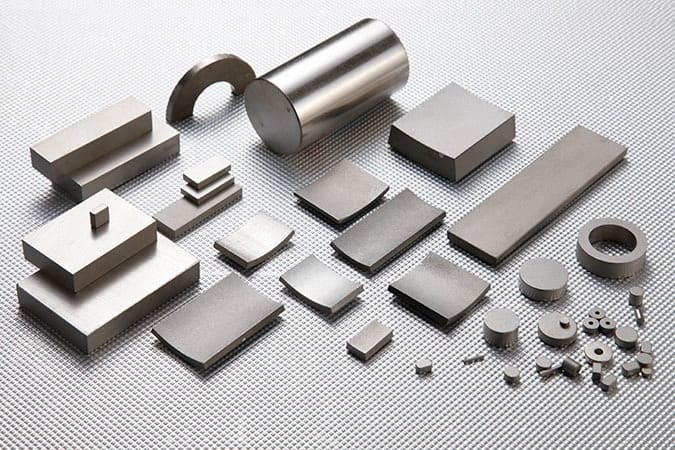
Explore our different shapes of magnet products.
Why Is Axial Magnetization Preferred in Cylinders?
Most cylinder magnets are axially magnetized, meaning the north and south poles are on the flat ends. This orientation directs the magnetic field in a straight line through the length of the magnet, making it excellent for applications requiring linear magnetic interaction or deep field penetration.
Benefits of Axial Magnetization:
- Predictable and stable field geometry
- Strong magnetic pull at the ends
- Easy alignment with sensors or ferrous targets
- Ideal for repulsion/attraction configurations
For example, in sensor devices, the axial magnetic field allows precise triggering based on distance and orientation, something less consistent in radially magnetized or irregularly shaped magnets.
How Do Dimensions Influence Magnetic Performance?
The performance of a cylinder magnet is not just about its shape but also about its length-to-diameter (L/D) ratio. Changing the dimensions can significantly affect the field distribution, holding force, and magnetic reach.
Dimensional Influence Table:
| L/D Ratio | Magnetic Behavior | Applications |
| Low (<1) | Broad, shallow field | Surface mounts, assemblies, sensors |
| Moderate (1–2) | Balanced field with good reach | General-purpose cylinders |
| High (>2) | Long reach, concentrated field on ends | Magnetic rods, filters, isolation elements |
A longer magnet will typically generate a deeper and more focused magnetic field, making it useful for detecting or attracting objects buried in a material stream, such as in metal detection and food safety equipment.
How Does the Material Affect Magnetic Properties?
Even within the same shape, material choice drastically alters performance. Neodymium, ferrite, Alnico, and SmCo are common materials for cylinder magnets, each with unique magnetic and thermal properties.
Material Comparison Table:
| Material | Max Energy Product (MGOe) | Temp Resistance | Cost | Common Uses |
| Neodymium | 30–52 | Up to 80–200°C | Moderate | Sensors, motors, magnetic rods |
| Ferrite | 3–5 | Up to 250°C | Low | Budget magnetic assemblies |
| SmCo | 16–32 | Up to 300°C+ | High | High-temp electronics, defense, aerospace |
| AlNiCo | 5–9 | Up to 500°C+ | Moderate | Instruments, rotating machinery |
Neodymium magnets are preferred for high-performance cylinder magnets due to their compact strength and consistent magnetization. However, if high temperature stability is needed, SmCo or Alnico may be more suitable.
Request a custom quote for high-quality magnetic products.
How to Choose the Right Cylinder Magnet?
When selecting a cylinder magnet, consider not only magnetic strength but also application-specific requirements such as space, temperature, and mechanical stress.
Selection Guidelines:
- Strength Requirements: Higher pull force = longer length or higher-grade material
- Temperature Limits: Choose material based on operating temperature range
- Magnetization Direction: Axial for depth, diametrical for rotational torque
- Mounting Environment: Consider corrosion resistance (e.g., coated neodymium)
- Shape Tolerance: Ensure proper fit in cylindrical slots or tubes
These factors help avoid performance loss due to demagnetization, misalignment, or premature wear in high-duty environments.
FAQ
| Question | Answer |
| What is the best magnetization for a cylinder magnet? | Axial magnetization is preferred for most uses due to its strong linear field. |
| Generally, yes—longer magnets offer deeper, more concentrated magnetic reach. | Yes, but material choice is critical. SmCo and Alnico handle higher temps. |
| Are cylinder magnets safe near electronics? | Strong magnets like neodymium can disrupt sensitive electronics—use with caution. |
| How are they mounted in assemblies? | Often fitted into drilled holes or held by adhesive, clamps, or sleeves. |
| Do longer cylinders have more magnetic force? | Generally yes—longer magnets offer deeper, more concentrated magnetic reach. |
Conclusion
The shape of a cylinder magnet plays a vital role in its magnetic behavior. From field direction to pull force and installation compatibility, geometry can’t be overlooked when designing or choosing a magnetic solution. Cylinder magnets offer predictable, strong axial magnetism ideal for many high-performance applications—from industrial separation to medical devices.
For businesses and researchers seeking top-quality cylinder magnets, Heeger Magnets offers a wide range of options, including custom sizes, grades, and coatings. Whether you’re optimizing performance in extreme environments or designing for precision sensing, our team can help you choose the right solution with confidence.
Looking for high-quality magnet products? Contact us today!